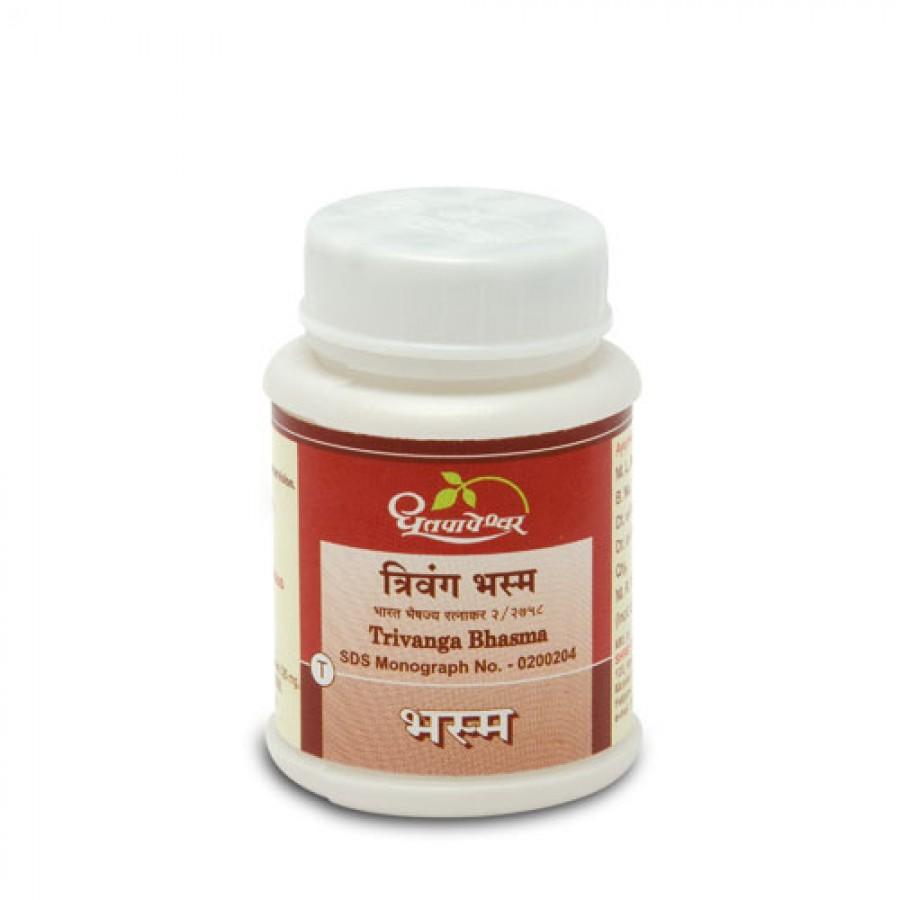
Trivanga Bhasma
Dhootapapeshwar Trivanga bhasma Buy 10gm
Dhootapapeshwar Trivanga bhasma: is specifically used for the treatment of reproductive disorders like infertility, nocturnal emissions, impotency, leucorrhea, and miscarriages.
Trivanga bhasma is a herbomineral calcined ayurvedic medicine in which Naga (Lead), Vanga (Tin), and Yashada (Zinc) are the major constituents of medicine. Trivanga bhasma is specifically used for the treatment of reproductive disorders like infertility, nocturnal emissions, impotency, leucorrhea, miscarriages, etc. Testes, uterus, urine bladder, and ovaries are among the organs affected. As a result, disorders affecting these organs are treated using it.
In Rasashastra texts, all three metals ( Naag, Vanga, Yashada) are classified as 'puti loha'. To make trivanga bhasma, these dhatus go through the shodhana, jarana, and Marana processes.
In the shodhana process all three metals are purified separately.
In the jarana process, the pure metals are melted one by one i.e.; Yashada , naga , and vanga respectively in an iron pan. The molten trivanga is then added by apamarga panchang powder (Achyranthes aspera) and stirred continuously with an iron ladle. This procedure was repeated until the trivanga powdered and became red.
Marana process which is according to the Ayurveda text bharat bhaisajya ratnakar, Vanga, Naag, and Yashada are mixed with hingulotha parad or purified parad (mercury) and then titurated with lemon juice ( nimbu swaras). Purified hartaal or orpiment ( arsenic trisulphide ) and purified gandhak ( sulphur ) is mixed to make kajjali ( small cakes ) and then subjected to laghuputa to make fine yellow colour bhasma of trivanga.
Trivanga bhasma has aphrodisiac, androgenic and antimicrobial effects. It also pacifies kapha dosha in the body. It is known to be vajikar ( increasing sexual potency) and balya ( increasing strength).
It gives nourishment to all the dhatus ( ras, rakt , mansa , meda , majja, ashti, shukra) in the body.
Disclaimer
While we strive to provide complete, accurate, and expert-reviewed content on our 'Platform', we make no warranties or representations and disclaim all responsibility and liability for the completeness, accuracy, or reliability of the aforementioned content. The content on our platform is for informative purposes only, and may not cover all clinical/non-clinical aspects. Reliance on any information and subsequent action or inaction is solely at the user's risk, and we do not assume any responsibility for the same. The content on the Platform should not be considered or used as a substitute for professional and qualified medical advice. Please consult your doctor for any query pertaining to medicines, tests and/or diseases, as we support, and do not replace the doctor-patient relationship.